

"Murrudha: Sovereign Walks – Track #14" is the fourteenth outcome associated with the ANU Indigenous Health and Wellbeing Grand Challenge project "Murrudha: Sovereign Walks – tracking cultural actions through art, Country, language and music".
"Murrudha: Sovereign Walks – Track #14" has been led by Professor Brenda L Croft (School of Art and Design, College of Arts and Social Sciences) and Professor Jamie Pittock (Fenner School of Environment and Society, College of Systems and Society) since 2020. This project collaborates the First Nations communities of Dhurga-Yuin, Ngambri, Meneroo-Ngarigo, Ngunnawal, High Country, Walgalu, Wiradyuri from Brungle, Canberra, Cowra, Gundagai, La Perouse, South Coast, Sydney, Tumut, Yass, Young and surrounding regions.
A key element of "Murrudha: Sovereign Walks – Track #14" is honouring the sovereign walk by Wiradyuri walamira (clevermen) Nangar (c. 1848–1927) also known as Jimmy Clements, and Ooloogan (c. 1840–1928) also known as George John Noble and Marvellous, who together undertook a three-day, 93-mile (150-kilometre) trek from Brungle Station (also known as Brungle Community) across the Brindabella Range to Canberra in early May 1927.
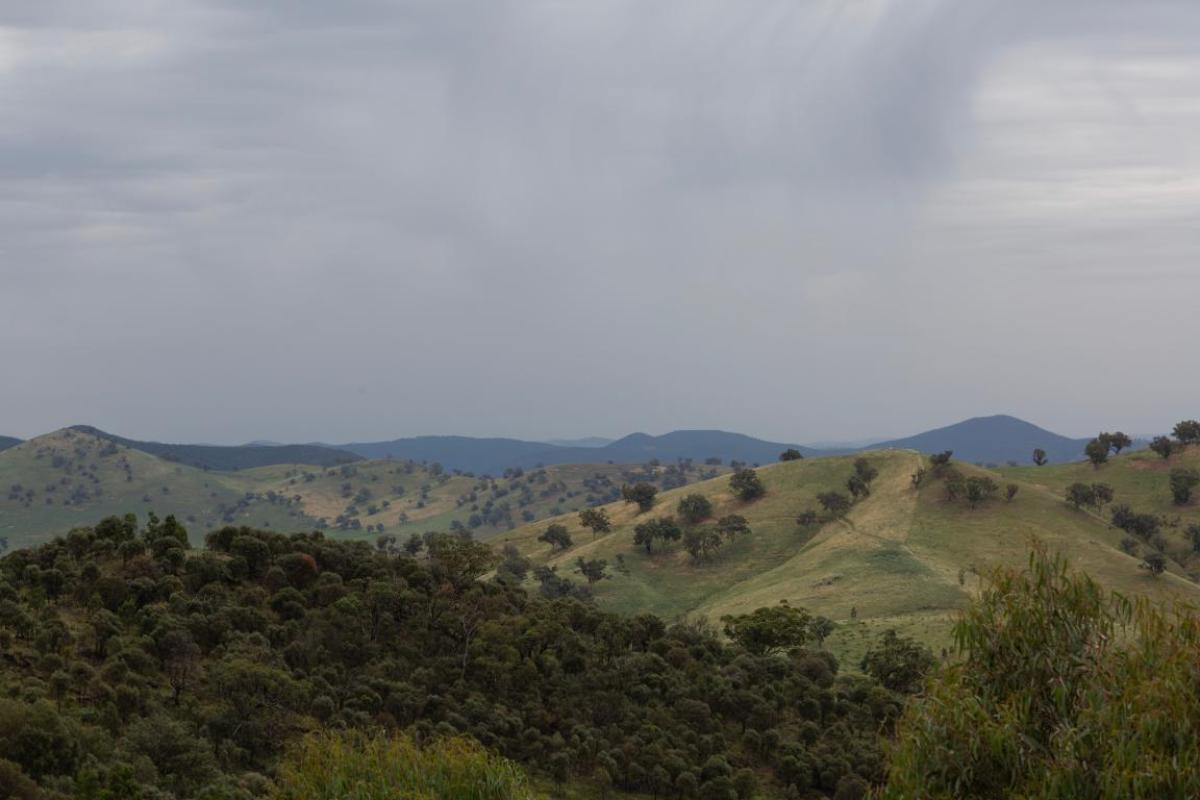
Departing from Brungle Community, nestled between Gundagai and Tumut on Walgalu/Wiradyuri Country, the two walamira journeyed across the mountain range in order to be present for the official opening of the new federal Parliament House on 9 and 10 May on Ngambri/Ngunawal homelands in the recently established national capital, Canberra. Contemporary press clippings acknowledge their participation as defending their sovereign rights to their traditional Country.
Thus far, the Murrudha team and First Nations community members have undertaken two test walks determining Nangar and Ooloogan’s route, with a final test walk undertaken for the 99th anniversary in May 2026.
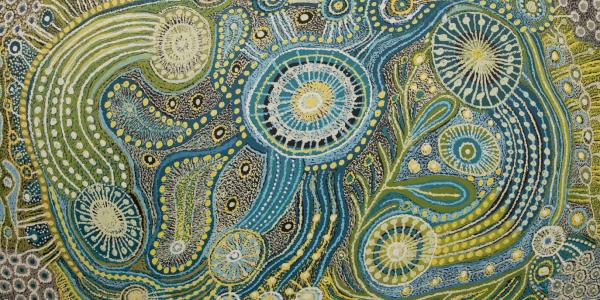
"Murrudha: Sovereign Walks – Track #14" will showcase creative-led research in progress from 2020 to 2026, including audio-visual documentation of annual outcomes over the past six years, alongside creative works by a number of First Nations and non-Indigenous artists associated with the project throughout that time. Public programs will include artist, project lead and community participants presentations, including a performance by Djinama Yilaga.
Other events you might be interested in...
Exhibition - Wangka Wakaṉutja: The Story of the Papunya Literature Production Centre